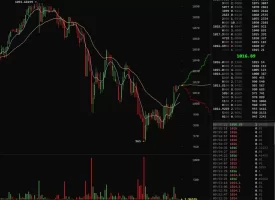
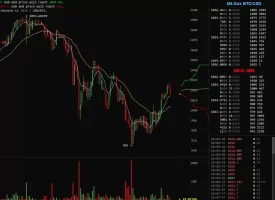
I just don't get how the predictions on work. I mean, you all seem to be doing some sort of trading, but at the same time, all cryptos just seem to be going up, up, up. 19/46 on cryptmarketcap are up in the past 7 days for a blended, basket return of 10%. Also, I would never have imagined BTC to go from $20 earlier this year to where it is now. Just curious tbh
I can't speak for the others, but I am an active trader (speculator), but not necessarily a day trader. The difference between day traders, speculators and investors, is mainly the time frame they are interested in. In my little list of 3 types, are on a continum of time frames, with investors having the longest time frame. Investors are months to years. SPeculators are days to weeks. Day traders and generally traders are seconds, to minutes to hours, and sometimes days.
So, you need to determine what time frame you are on and stick to that --some people find that very hard to do. Also bitcoin has really high volatilty, so I have found I need to shorten my time frame compared to other tradeables.
Once you figure out your time frame, you then focus on "predictions" (for lack of a better term) that match your time frame. But you also want to look at other time frames to see where your time frame falls inside of the bigger picture.
Here's an example: I am a speculator, so I am interested in trades that last a few days to weeks. This most recent trade I just exited an hour ago was only a 3 day trade. My entry was at about 855 and my exit at about 919.5
Before I put the trade on, I looked at the long term charts to see what the mega trend (secular trend) is. If the market is bullish on the daily charts, or 12 hour, or 8 hour charts, I then look for pullbacks within my time frame, namely the hourly to 30 min charts. I will switch the time frame setting on the chart multiple times and try to get a feel for what the market is doing. When I see a pullback, I look at the really short time frames (15min to 5min charts) to attempt to time a good entry point. In the trade I cited, I didn't buy on a pullback, but bought on a volatility breakout, which is another entry method I use. I still prefer buying on pullbacks, but they are hard to do, as buying when everyone is selling is counter intuitive.
Dislike ads? Become a Fastlane member:
Subscribe today and surround yourself with winners and millionaire mentors, not those broke friends who only want to drink beer and play video games. :-)
Access Restricted: Unlock 1,000,000+ Posts
Stop Peeking Through the Keyhole.
Open the Door.
You hit a wall because the best advice isn't free—it's earned. Since 2007, MJ DeMarco has been active here daily (99.9% active rate), building a war room for entrepreneurs who refuse to settle for mediocrity.
- Active Daily: Life-changing content posted dozens of times every day. No dead threads.
- MJ's Inner Circle: Direct access to the author of The Millionaire Fastlane.
- Vetted Network: Connect with founders scaling to 7 and 8 figures.
- Proven Roadmaps: Strategy over motivation. Execution over "hustle porn."
"SCALED TO 6-FIGURE MONTHS"
"Tips and advice here saved me from huge mistakes, others allowed me to scale my business to 6-figure months."— User MitchC
"INSANE QUALITY OF PEOPLE"
"The number of high quality people I've met from this forum has been insane. All of it predicated on building real value."— User Richard Peck
"You are the average of the five people you surround yourself with."
Are you surrounding yourself with success?